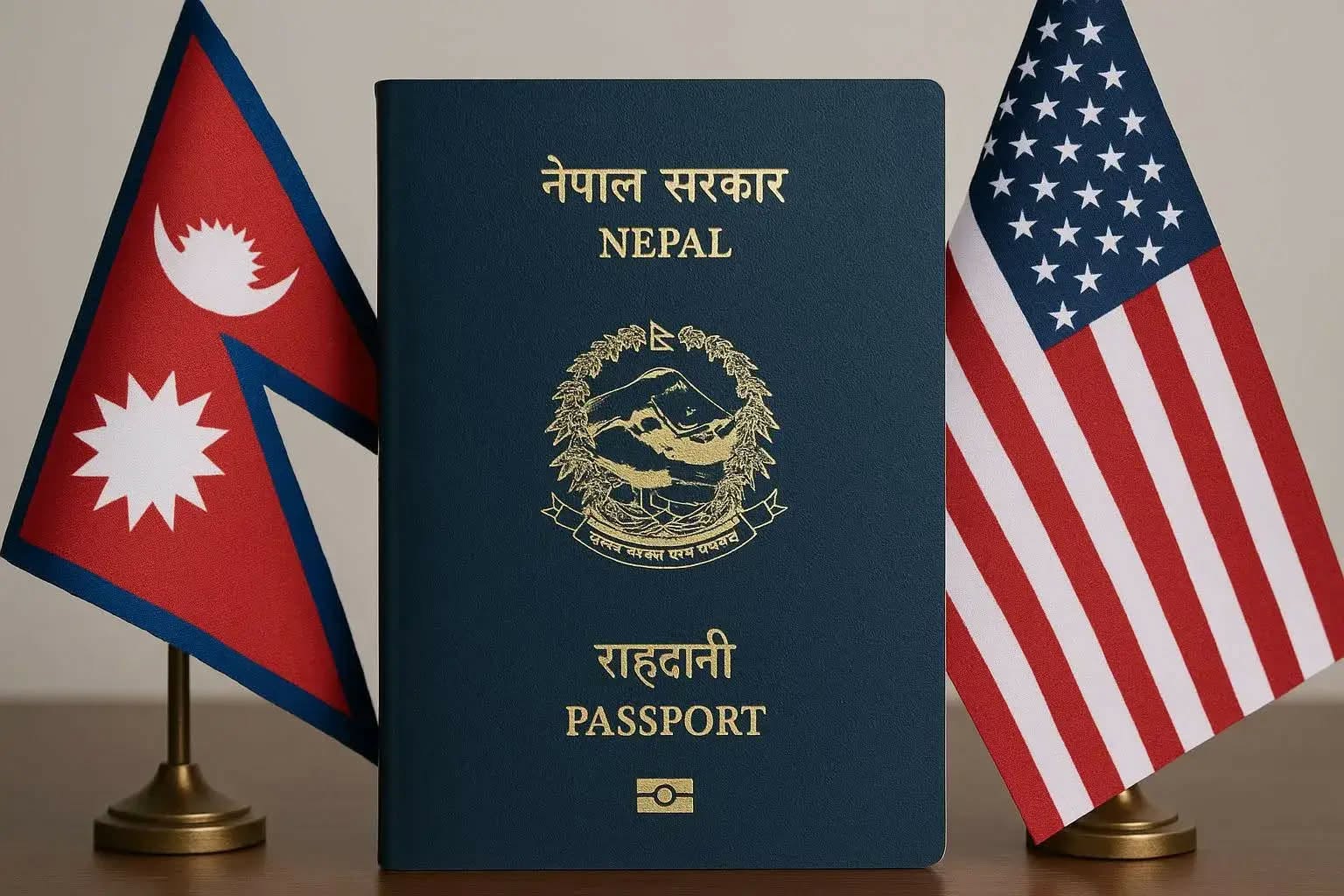
KATHMANDU: Formalizing the 12-month Visa Bond Pilot Program that took effect on August 20, 2025, the United States has announced that it will permanently implement its visa bond program for citizens of 50 countries, including Nepal, beginning Monday.
The move converts the temporary pilot initiative introduced last year into a standing immigration measure and applies to certain applicants seeking temporary business and tourist visas under the B1/B2 category.
In a statement, the US Department of State said the new rule makes the pilot program permanent and authorizes consular officers to require visa applicants to post a refundable financial bond to ensure compliance with the conditions of their nonimmigrant status and timely departure from the United States.
The department said the bond will be refunded if the visa holder leaves the United States within the authorized period of stay, does not travel before the visa expires, or is denied entry at a US port of entry.
Under the permanent system, the maximum bond amount has been increased from US$15,000 under the pilot program to US$20,000. Depending on factors such as the purpose of travel, employment, income, and individual circumstances, applicants may be required to provide a bond of US$10,000, US$15,000, or US$20,000. During the pilot phase, bond amounts ranged from US$5,000 to US$15,000.
The State Department said consular officers are generally expected to require a US$15,000 bond, although they may set a lower or higher amount based on the applicant’s circumstances.
The program covers nationals of several African countries as well as Nepal, Bangladesh, and Bhutan in South Asia.
The embassy also advised applicants not to make any payment through third-party websites and not to pay any bond amount unless specifically instructed by a consular officer.
According to the State Department, visa bonds may be imposed on applicants from countries with high visa overstay rates, limited information sharing, weak identity verification systems, incomplete criminal records, or shortcomings in travel document security and screening procedures.