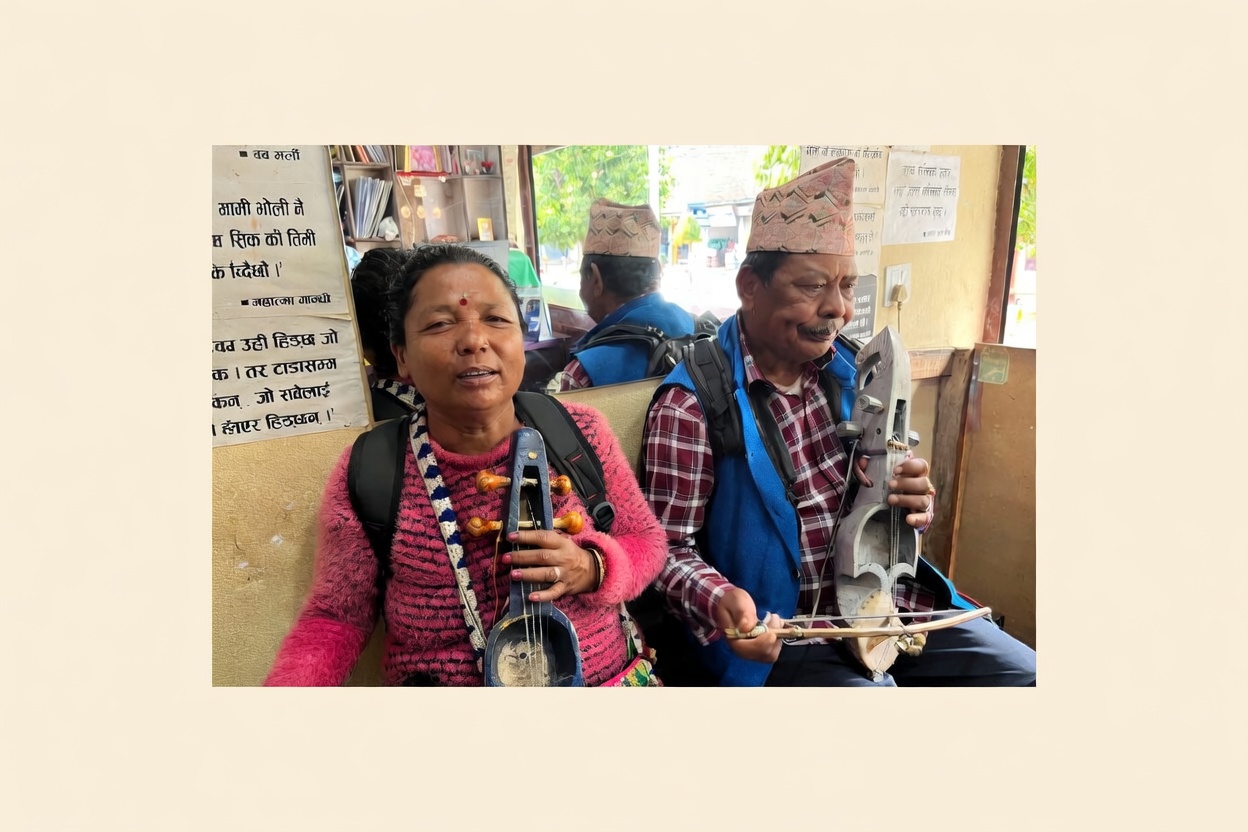
KATHMANDU: In the rhythm of Nepal’s highways and the hum of public buses, a 73-year-old man and his wife continue to carry a fading musical legacy across the country.
Lok Bahadur Gandharva and his 60-year-old wife, Dalli Gandharva, have spent most of their lives playing the sarangi—a traditional Nepali string instrument—while singing folk songs to passengers on buses and microbuses.
Originally from Tanahun district and now based in Butwal, the couple belong to the Gandharva community, long known for preserving oral traditions through music.
Each morning, they set out from home, boarding different vehicles and performing for travellers along the way. Their songs—often nostalgic and deeply rooted in rural life—strike an emotional chord with listeners. For many passengers, the melodies evoke memories of home, family and the past.
Voluntary donations from appreciative travellers remain their primary source of income. “Some days are better than others, but this is how we’ve sustained our household,” says Mr Gandharva. Despite the uncertainty of daily earnings, the couple say their consistent efforts have allowed them to make ends meet.
They have raised four children through this profession. “Being able to support our family through our own hard work is what matters most,” says Mrs Gandharva.
Over the years, their journey has taken them across Nepal—from east to west—offering not just performances but also a life of constant travel, human connection and cultural exchange.
Yet, their story also reflects a broader challenge. With the rise of digital entertainment and changing career aspirations among younger generations, traditional practices like sarangi playing are increasingly at risk of disappearing.
“This is our identity, our culture,” says Mr Gandharva. “We will continue as long as we can.”